The Certified Oracle Database 19c: SQL Workshop Course Overview is designed to equip professionals with the essential skills to become proficient in Oracle Database 19c: SQL Workshop Course Overview and cybersecurity.
Through hands-on labs, real-world simulations, and cutting-edge AI-driven tools, participants will become proficient in ethical hacking techniques and critical cybersecurity practices for defending against traditional and modern AI-powered threats.

I enroll for CISM Training & Certification. All the team members of Cyber Defentech are very good & very supportive. Thank you all the team. Highly recommend for ISACA trainings and Certification. Thank you Nitish.
.webp)
.webp)
Best institute for cyber security course, I do certified ethical hacking (ceh v13) training and certificate form cyber defentech. Puja mam and Nitish sir is very supportive. I am very thankful for cyber defentech team.Any one to do any cyber security training and Certification go for cyber defentech.
.webp)
I join here for certified ethical hacking training and certification, puja mam is very supportive, faculty is to good 👍. Cyber Defentech is best for any one want to do cyber security training and certifications.👍
.webp)
I’m beyond excited to announce that I’ve officially earned my Certified Ethical Hacker (CEH) certification! by EC-Council This milestone marks a significant step in my cybersecurity journey, and I couldn’t have done it without the incredible support of Nitish Pathak, Vipin Yadav, Cyber Defentech mentorship, encouragement, and belief in me pushed me to stay focused and achieve this goal.
.webp)
I am pleased to share that I have successfully cleared the CEH Practical certification from EC-Council. I appreciate the support provided by the EC-Council proctor, who ensured a seamless exam experience. A special thank you to Nitish Pathak for facilitating access to the necessary labs and training resources, which helped in streamlining the preparation process.
.webp)
I had a great experience learning and pursuing my Certified Ethical Hacker (Practical) by EC-Council. The instructors are very helpful and I would like to recommend it to anyone who are looking to pursue their careers in Cyber Security. Thanks to Cyber Defentech for the guidance.
.webp)
I’m beyond excited to share that I have officially earned the hashtag#CertifiedEthicalHacker (Practical)certification from EC-Council. This achievement validates my hands-on skills in ethical hacking, penetration testing, and cybersecurity defense. 🛡️ A special thanks to Cyber Defentech Institute for their incredible support and guidance throughout this journey. 🙌
.webp
)
.webp)
It is my pleasure to share that I have successfully completed the Certified Ethical Hacker delivered by EC-Council . Special thanks for supporting Nitish Pathak and Cyber Defentech team for valuable support and guide.
I am pleased to share that I have successfully cleared the CEH Practical certification from EC-Council. I appreciate the support provided by the EC-Council proctor, who ensured a seamless exam experience. A special thank you to Nitish Pathak for facilitating access to the necessary labs and training resources, which helped in streamlining the preparation process.
I’m beyond excited to announce that I’ve officially earned my Certified Ethical Hacker (CEH) certification! by EC-Council This milestone marks a significant step in my cybersecurity journey, and I couldn’t have done it without the incredible support of Nitish Pathak, Vipin Yadav, Cyber Defentech mentorship, encouragement, and belief in me pushed me to stay focused and achieve this goal.
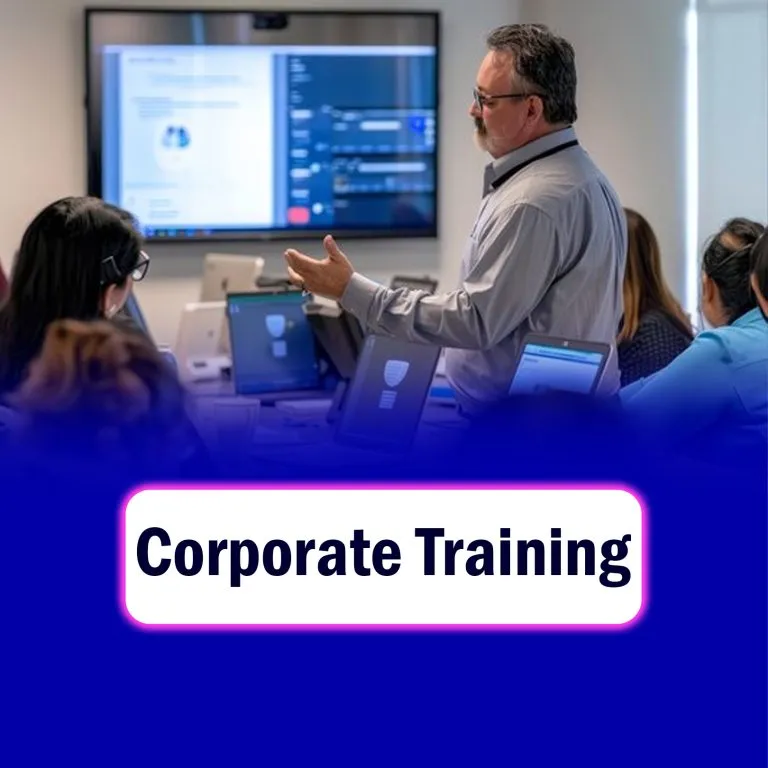



This course introduces you to Oracle Database 19c and teaches the fundamentals of relational databases. BDA +2 ulearn.edu.uy +2 You learn how to write queries using SQL, including queries that span one or more tables. BDA +1 The course also covers how to insert, update, and delete data, and how to work with database objects like tables, views, indexes, sequences, and synonyms. methodnl.com You’ll also learn to manage security, use data dictionary views, and deal with more advanced query techniques like subqueries and set operators.
1. Basic Computer Knowledge Understanding how computers, files, and applications work Familiarity with using Windows/macOS/Linux 2. Basic Understanding of Databases (Helpful but Not Mandatory) What is a database What is data (tables, rows, columns) 3. Logical Thinking SQL requires problem-solving, so basic logical reasoning is helpful. 4. Interest in Programming or Data Being interested in coding, data analysis, or IT helps you learn faster. 5. Optional Knowledge (Good to Have) Basic programming ideas (variables, conditions) Understanding of business or data concepts
1. Learn the Basics of SQL Understand what SQL is and how it is used to interact with databases. Learn SQL terminology like tables, rows, and columns. 2. Write SQL Queries Create simple and advanced SQL queries to retrieve data from tables. Use SELECT statements effectively. 3. Filter, Sort, and Format Data Apply conditions, sorting, and formatting to get meaningful results. Use WHERE, ORDER BY, and other clauses. 4. Use SQL Functions Learn built-in functions for calculations, text formatting, date manipulation, etc. Understand numeric, character, and date functions. 5. Manage Data in Tables Insert, update, and delete data using SQL DML statements. Understand how data is stored and modified. 6. Work with Multiple Tables Perform joins to combine data from different tables. Understand inner, outer, and cross joins. 7. Create and Manage Database Objects Learn to create tables and other database structures. Use DDL statements like CREATE, ALTER, and DROP. 8. Use Subqueries and Advanced Query Techniques Write nested queries for complex data retrieval. Understand single-row and multiple-row subqueries. 9. Improve Query Performance Learn basic techniques to write efficient SQL queries. 10. Prepare for Real-World Database Tasks Gain skills required for database developers, analysts, and administrators.
1. Introduction to SQL What SQL is How SQL works with Oracle databases Understanding database tables and structures 2. Retrieving Data Using SELECT Writing SELECT queries Selecting specific columns Using aliases and arithmetic expressions 3. Filtering and Sorting Data Using WHERE clause Applying comparison operators Sorting with ORDER BY Using logical operators (AND, OR, NOT) 4. Using Single-Row Functions Character functions Number functions Date and time functions Conversion functions 5. Using Group Functions Grouping data with GROUP BY Filtering grouped data with HAVING Aggregate functions (SUM, AVG, COUNT, MIN, MAX) 6. Displaying Data from Multiple Tables Understanding joins INNER JOIN, LEFT/RIGHT OUTER JOIN, CROSS JOIN Using join conditions 7. Subqueries Single-row subqueries Multiple-row subqueries Nested queries 8. Manipulating Data (DML) Inserting new data (INSERT) Updating existing data (UPDATE) Deleting data (DELETE) Transaction control (COMMIT, ROLLBACK) 9. Creating and Managing Database Objects (DDL) Creating tables Modifying tables Dropping tables Working with constraints (PRIMARY KEY, FOREIGN KEY, UNIQUE) 10. Controlling User Access (Optional in Some Editions) Creating users Granting and revoking privileges 11. Advanced SQL Concepts (Depending on Edition) Set operators (UNION, INTERSECT, MINUS) Data dictionary views Using sequences, synonyms, and indexes
Good question. Yes, there is a certification related to the Oracle Database 19c: SQL Workshop course: According to training providers, this course prepares you for the Oracle Database SQL exam (1Z0-082). Infinity Training Institute +2 Infinity Training Institute +2 However, the course itself gives you a certificate of completion, not the Oracle certification badge. ssdntech.com +1 On Oracle’s official certification list, there is a “Oracle Database SQL” exam (1Z0-071) mentioned.
Wide Demand for SQL / Database Developers SQL and database skills remain very important, especially in companies that use Oracle Database. Roles you can target include SQL Developer, PL/SQL Developer, Database Developer, and Database Administrator (DBA). Salary Potential SQL Developers in India make on average ₹2.1 Lakh to ₹9 Lakh for 1–6 years of experience. AmbitionBox Oracle SQL Developers at Oracle (1–4 years experience) make around ₹5.7 L – ₹8 L per year. AmbitionBox PL/SQL Developers (Oracle) can earn between ₹4.5 L to ~₹8 L or more depending on their experience and specialization. Softlogic +2 Indeed +2 For Oracle Database Developers (more experienced roles), salaries can go much higher — in some cases ₹15.5 L to ₹28 L for 5–8 years’ experience. AmbitionBox Stable and Long-Term Roles SQL skills are core to many IT functions — database development, analytics, data engineering — so learning SQL opens up stable career paths. Oracle Database is used in many large organizations (finance, telecom, enterprise software), which means there are consistent job opportunities. As companies continue to use relational databases, demand for people who can write efficient SQL, design schemas, or maintain data will remain. Career Growth With SQL/PL-SQL skills, you can start in a junior role (SQL Developer) and move up to: Senior Developer / Database Developer Database Architect DBA (Database Administrator) Or even Data Engineer / BI Developer roles (if you learn complementary data tools) Competition and Skills There is competition from other database technologies (MySQL, PostgreSQL, NoSQL), but Oracle is still highly valued in enterprise settings. To stay competitive, it helps to also learn things like performance tuning, PL/SQL, and database administration in addition to just SQL.


 (1) (1).webp)
.webp)
.webp)



 (2).webp)
.webp)
.webp)