The Certified linux training program is designed to equip professionals with the essential skills to become proficient in linux and cybersecurity.
Through hands-on labs, real-world simulations, and cutting-edge AI-driven tools, participants will become proficient in ethical hacking techniques and critical cybersecurity practices for defending against traditional and modern AI-powered threats.

I enroll for CISM Training & Certification. All the team members of Cyber Defentech are very good & very supportive. Thank you all the team. Highly recommend for ISACA trainings and Certification. Thank you Nitish.
.webp)
.webp)
Best institute for cyber security course, I do certified ethical hacking (ceh v13) training and certificate form cyber defentech. Puja mam and Nitish sir is very supportive. I am very thankful for cyber defentech team.Any one to do any cyber security training and Certification go for cyber defentech.
.webp)
I join here for certified ethical hacking training and certification, puja mam is very supportive, faculty is to good 👍. Cyber Defentech is best for any one want to do cyber security training and certifications.👍
.webp)
I’m beyond excited to announce that I’ve officially earned my Certified Ethical Hacker (CEH) certification! by EC-Council This milestone marks a significant step in my cybersecurity journey, and I couldn’t have done it without the incredible support of Nitish Pathak, Vipin Yadav, Cyber Defentech mentorship, encouragement, and belief in me pushed me to stay focused and achieve this goal.
.webp)
I am pleased to share that I have successfully cleared the CEH Practical certification from EC-Council. I appreciate the support provided by the EC-Council proctor, who ensured a seamless exam experience. A special thank you to Nitish Pathak for facilitating access to the necessary labs and training resources, which helped in streamlining the preparation process.
.webp)
I had a great experience learning and pursuing my Certified Ethical Hacker (Practical) by EC-Council. The instructors are very helpful and I would like to recommend it to anyone who are looking to pursue their careers in Cyber Security. Thanks to Cyber Defentech for the guidance.
.webp)
I’m beyond excited to share that I have officially earned the hashtag#CertifiedEthicalHacker (Practical)certification from EC-Council. This achievement validates my hands-on skills in ethical hacking, penetration testing, and cybersecurity defense. 🛡️ A special thanks to Cyber Defentech Institute for their incredible support and guidance throughout this journey. 🙌
.webp
)
.webp)
It is my pleasure to share that I have successfully completed the Certified Ethical Hacker delivered by EC-Council . Special thanks for supporting Nitish Pathak and Cyber Defentech team for valuable support and guide.
I am pleased to share that I have successfully cleared the CEH Practical certification from EC-Council. I appreciate the support provided by the EC-Council proctor, who ensured a seamless exam experience. A special thank you to Nitish Pathak for facilitating access to the necessary labs and training resources, which helped in streamlining the preparation process.
I’m beyond excited to announce that I’ve officially earned my Certified Ethical Hacker (CEH) certification! by EC-Council This milestone marks a significant step in my cybersecurity journey, and I couldn’t have done it without the incredible support of Nitish Pathak, Vipin Yadav, Cyber Defentech mentorship, encouragement, and belief in me pushed me to stay focused and achieve this goal.






Linux is a free, open-source operating system based on UNIX. It acts as the core software that manages hardware resources and allows other programs to run on a computer. Like Windows or macOS, Linux provides a user interface and handles tasks such as file management, process control, and device management. One of the key features of Linux is its open-source nature, meaning its source code is publicly available and can be modified or distributed by anyone. This has led to the creation of many different versions (called distributions) like Ubuntu, Fedora, Debian, Kali Linux, and CentOS, each designed for different needs. Linux is widely used in servers, cybersecurity, programming, cloud systems, embedded devices, and even in smartphones (like Android, which is based on Linux). It is known for its stability, security, and performance, making it a popular choice for developers, system administrators, and ethical hacker
There are no strict prerequisites for learning Linux after 12th, which makes it a great choice for students interested in IT, cybersecurity, or software development. However, having some basic skills and knowledge can help you get started more easily: 1. Basic Computer Knowledge You should be comfortable using a computer—navigating folders, copying files, and installing software. 2. Understanding of Operating Systems A basic idea of what an operating system does (like Windows) helps you understand Linux concepts more quickly. 3. Basic English Reading Skills Since most Linux commands and manuals are in English, understanding basic instructions is important. 4. Interest in Technology Curiosity about how computers work, how systems are managed, or how hackers operate can motivate learning Linux deeply.
It also focuses on teaching how to handle system administration tasks, such as managing users, processes, services, and networking configurations. For those pursuing cybersecurity or server management, the course may also cover Linux security basics, shell scripting, and working with Linux-based servers. Overall, the goal is to make learners confident in using Linux for personal, academic, or professional purposes, including careers in IT support, system administration, ethical hacking, and devops.
The job market for Linux professionals is strong and continuously growing, especially in fields like IT infrastructure, cloud computing, cybersecurity, DevOps, and system administration. Since Linux powers a majority of the world’s servers, supercomputers, cloud platforms, and cybersecurity tools, companies across the globe actively seek individuals skilled in Linux.
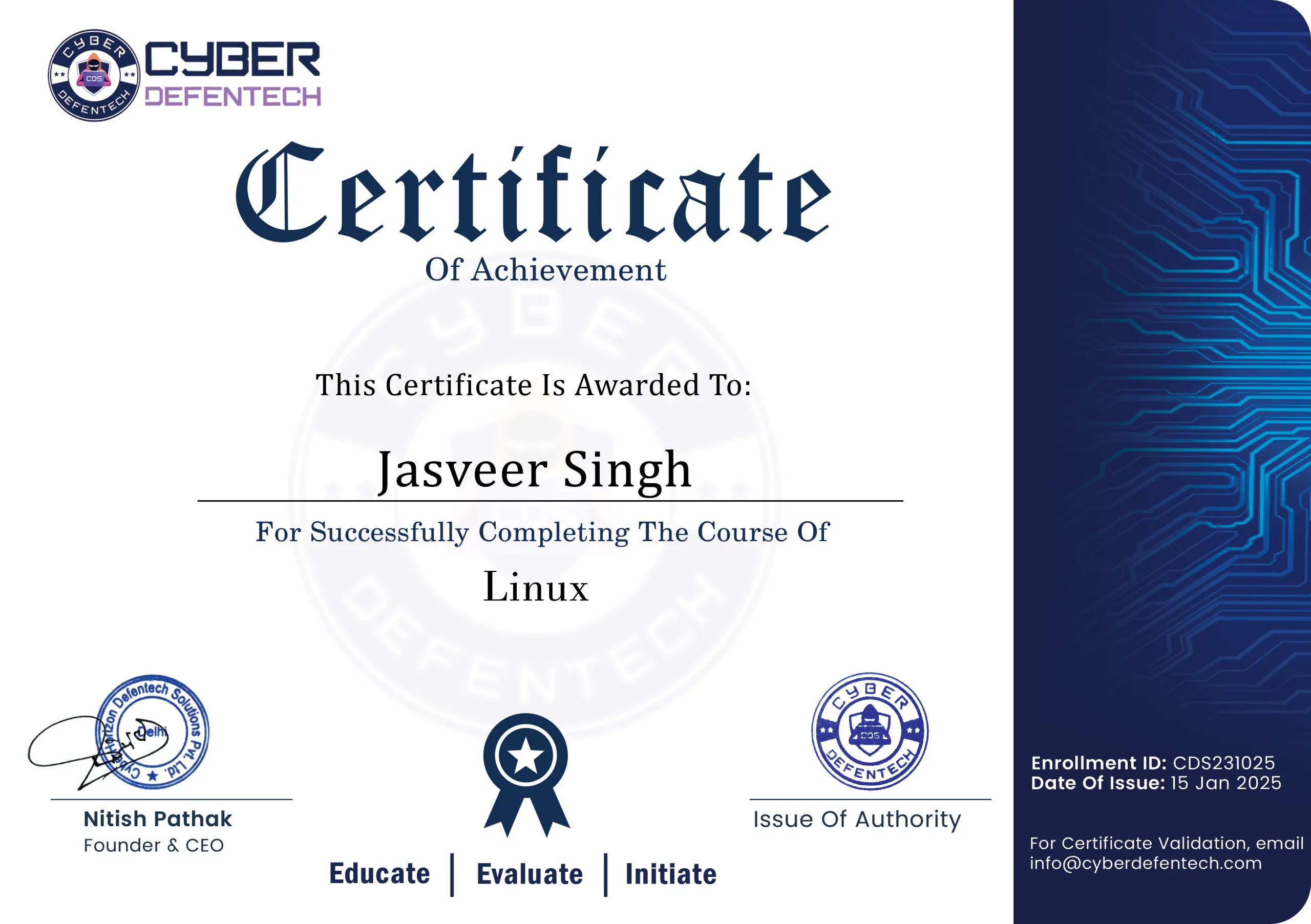
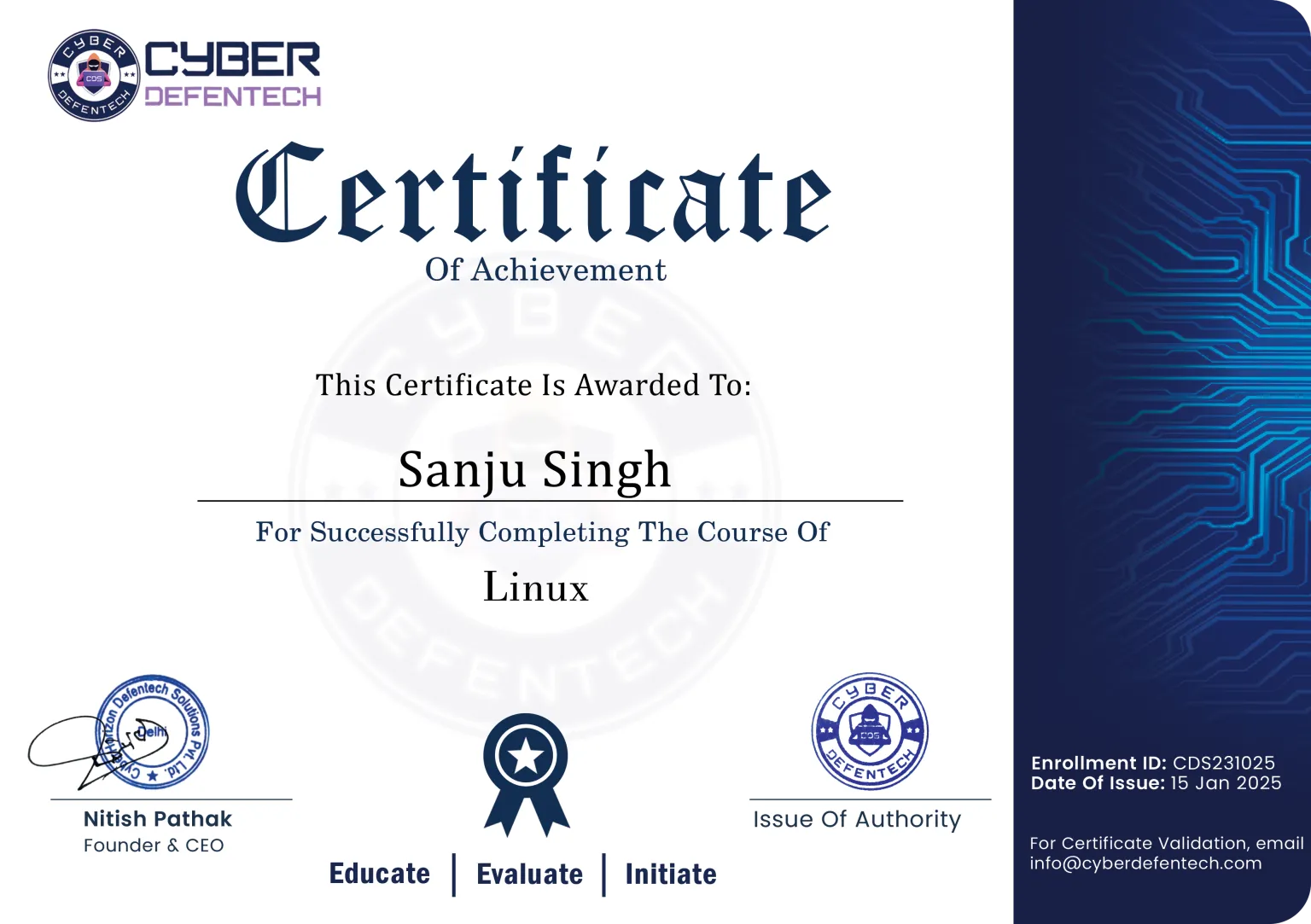
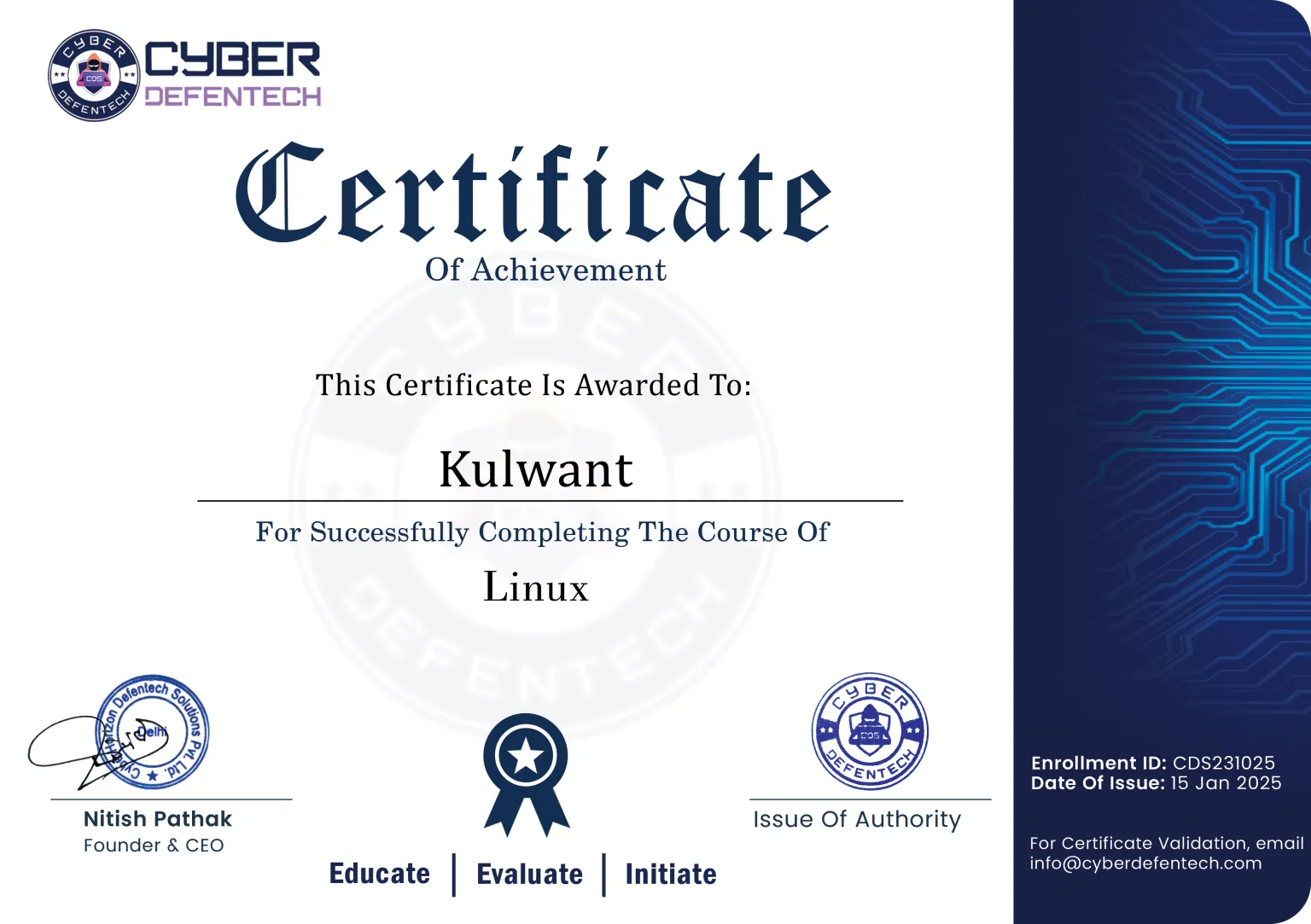
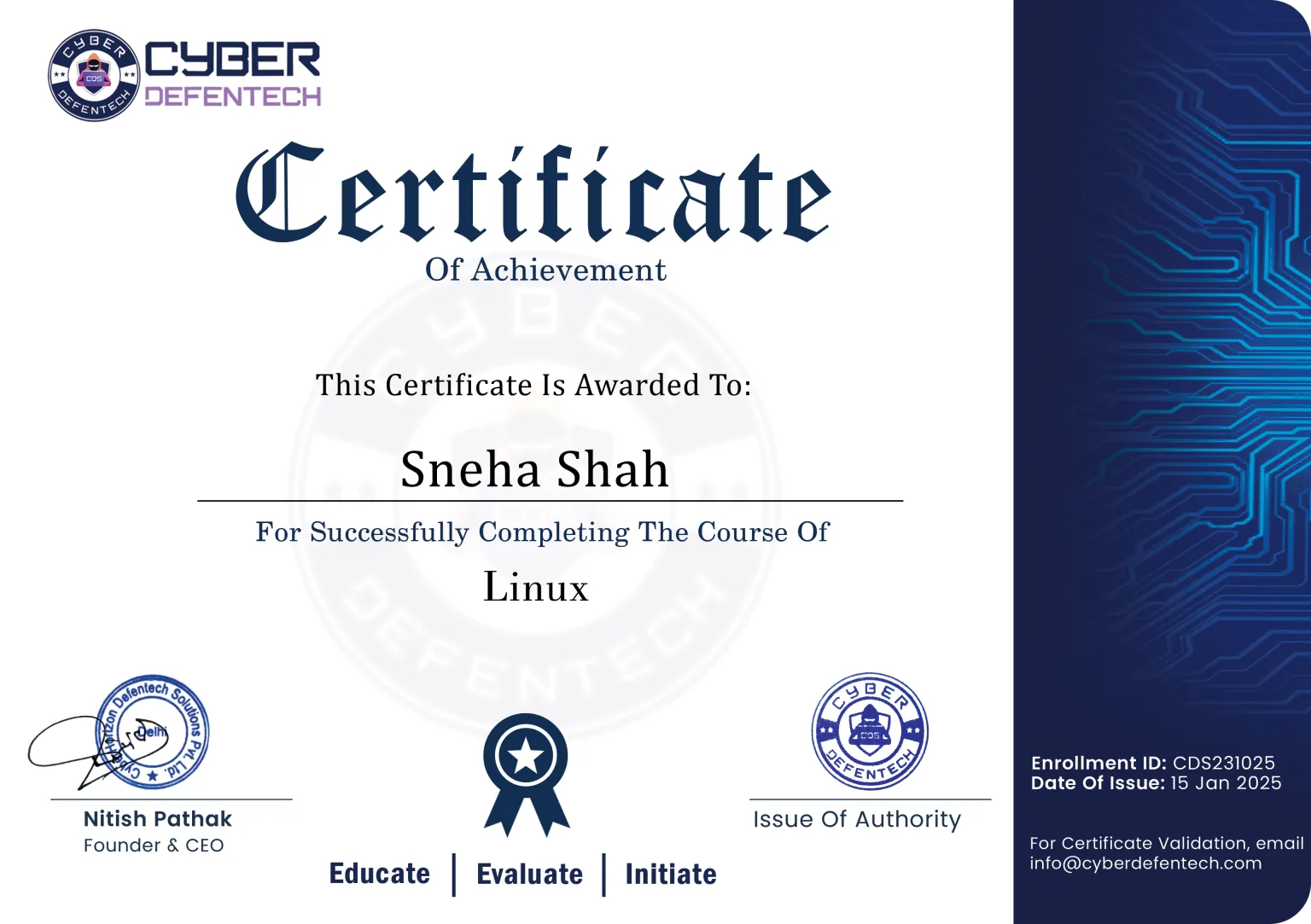
Yes, certification is often available after completing a Linux course. Many educational platforms, training institutes, and online learning websites provide a certificate of completion once you finish the course and pass any required assessments or projects. These certificates can help you: Validate your skills in Linux programming Enhance your resume and job prospects Demonstrate commitment to learning and skill development
What is the Linux course about? (Covers basics of Linux operating system, shell, and system administration.) Who can enroll in this course? (Beginners, IT students, developers, and system administrators.) Do I need prior knowledge before starting Linux? (No prior experience needed; basic computer knowledge is enough.) What topics are covered in the Linux course? Introduction to Linux & Distributions Linux File System & Commands User & Group Management File Permissions & Ownership Package Management (apt, yum, etc.) Process Management Shell Scripting Basics Networking in Linux System Monitoring & Logs Basic Security in Linux Will I get hands-on practice? (Yes, with live terminal commands and real-time projects.) Is this course suitable for absolute beginners? (Yes, it starts from scratch and gradually moves to advanced topics.) Will I learn Linux commands in detail? (Yes, every essential command with practical usage is explained.) Do you provide certification after the course? (Yes, students receive a certificate after successful completion.) How will this course help my career? (Linux skills are highly in demand for DevOps, Cloud, Cybersecurity, and IT jobs.) Is Linux free to use and practice? (Yes, Linux is open-source. You can install it or use it via virtual machines.)


 (1) (1).webp)
.webp)
.webp)



 (2).webp)
.webp)
.webp)
.webp)